Vasa Warship Sinks 1.3 km Into Its Maiden Voyage After King Demands Extra Gun Deck
What happened
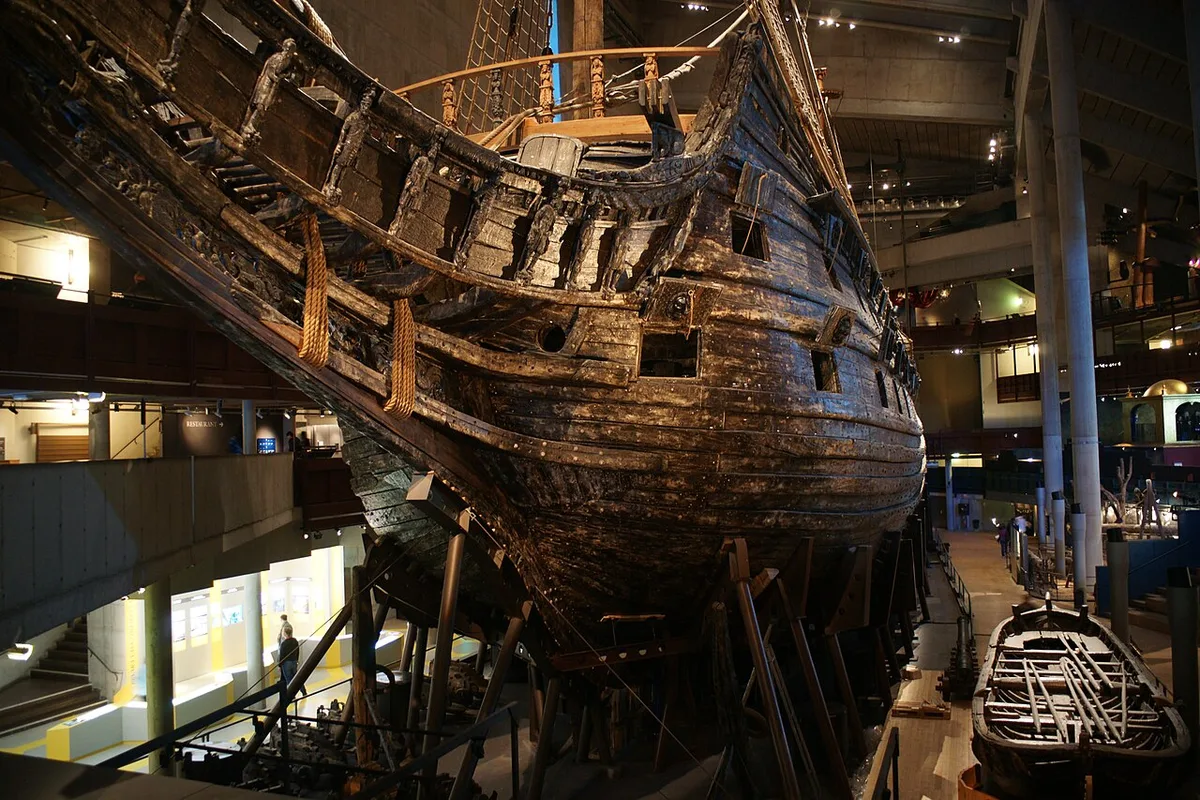
On 10 August 1628, the Swedish warship Vasa sank less than 1.3 km into her maiden voyage in Stockholm harbour. King Gustav II Adolf had demanded a second gun deck be added to the design mid-construction, making the ship dangerously top-heavy. A stability test conducted before launch — 30 men running side-to-side on deck until the ship began to roll — was halted and the result quietly filed away. Nobody dared tell the king.[1]
What went wrong
King Gustav II Adolf ordered a second gun deck added after construction was under way, shifting the centre of gravity above the waterline. The shipwright knew the vessel was dangerously unstable but could not refuse a royal command. A pre-launch stability test made the problem explicit: the ship listed severely when men ran across the deck and the test had to be stopped. The result was presented to the admiral, who reportedly concluded that "God and the king" had ordered the ship built as it was. The concern was never escalated. On her first day at sea, a gust of wind heeled Vasa over; water flooded the open gun ports; she sank in minutes. Thirty people drowned.[1]
Lesson learned
Scope creep mandated by the highest authority, combined with a culture where nobody dares deliver bad news upward, is among the oldest causes of engineering failure. The Vasa sank not because nobody knew — the stability test was explicit evidence — but because the organisational structure made it impossible to act on what was known. Every modern incident where safety data is "filed" rather than escalated is a version of this.
30 people died in 1628. Over 15.8 generations at a net reproduction rate of 1.2, each victim's line produces an estimated 18 living descendants today. Their combined lifetime economic output — 30 × 18 × $2.16M — represents value that was permanently removed from the world. This figure exceeds the primary damage estimate by more than 2× and is shown separately to avoid distorting cross-incident comparisons.
DVL = 30 × 1.215.8 × $2.16M · methodology §03E
Sources
- [1]
External links can go dark — pages move, paywalls appear, domains expire. Every source above includes a Wayback Machine snapshot link as a fallback. All citations are best-effort research; if a source contradicts our summary, the primary source takes precedence.