Challenger Breaks Apart 73 Seconds After Launch After Engineers' O-Ring Warnings Are Overruled
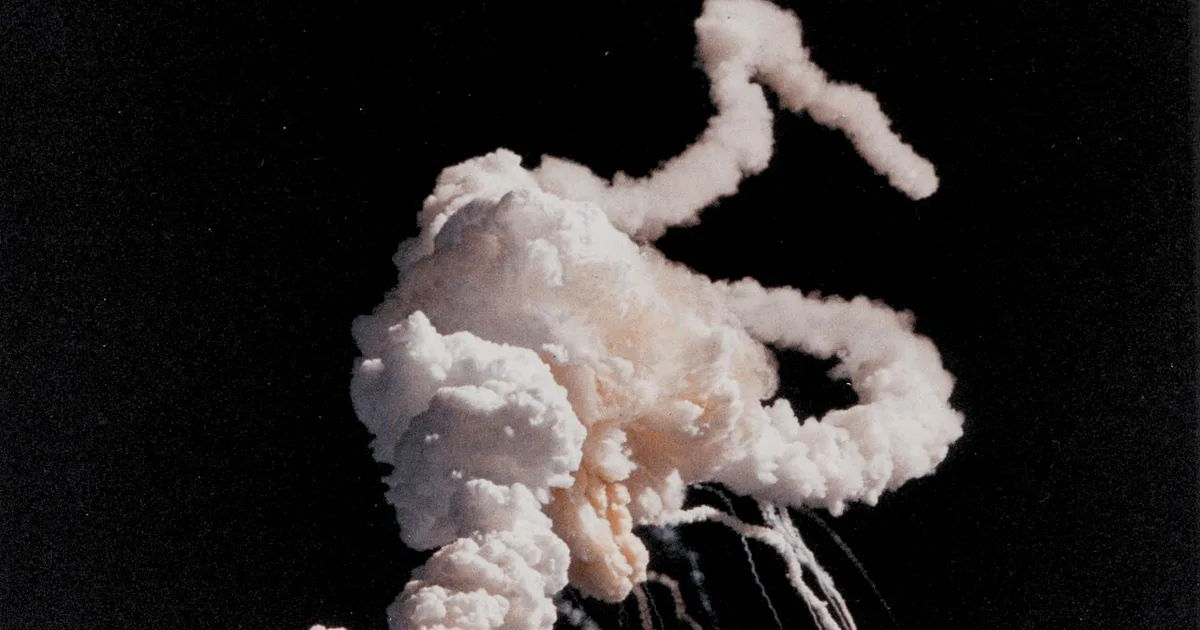
What happened
Space Shuttle Challenger broke apart 73 seconds after launch on 28 January 1986, killing all seven crew members. The cause was an O-ring failure in the right solid rocket booster, exacerbated by the coldest launch temperature in shuttle history. The night before launch, engineers at Morton Thiokol had explicitly recommended delaying — they were overruled by NASA managers under schedule pressure. A manager at Thiokol reportedly instructed engineers to "take off their engineering hats and put on their management hats."[1]
What went wrong
Engineers at Thiokol knew O-rings lost resilience at low temperatures and had documented the concern. The morning launch temperature was -1.7°C, well outside any previous flight envelope. Thiokol's initial recommendation was "do not launch below 53°F (12°C)." NASA managers pushed back hard, calling the data inconclusive. Under pressure, Thiokol management voted to approve the launch without the engineers' consent. The Rogers Commission later found that NASA's internal communication structure systematically filtered safety concerns before they reached decision-makers — a finding that would go unimplemented until it mattered again 17 years later.[1]
Lesson learned
When engineers escalate safety concerns and are instructed to "put on their management hats," the system has failed before the hardware does. Challenger established the modern concept of psychological safety in engineering: the right — and obligation — to stop a launch without requiring management consensus. NASA partially reversed these lessons before Columbia in 2003.
Sources
- [1]
External links can go dark — pages move, paywalls appear, domains expire. Every source above includes a Wayback Machine snapshot link as a fallback. All citations are best-effort research; if a source contradicts our summary, the primary source takes precedence.