South Sea Bubble 1720: British Parliament's Insider Trading Scheme Bankrupts a Nation
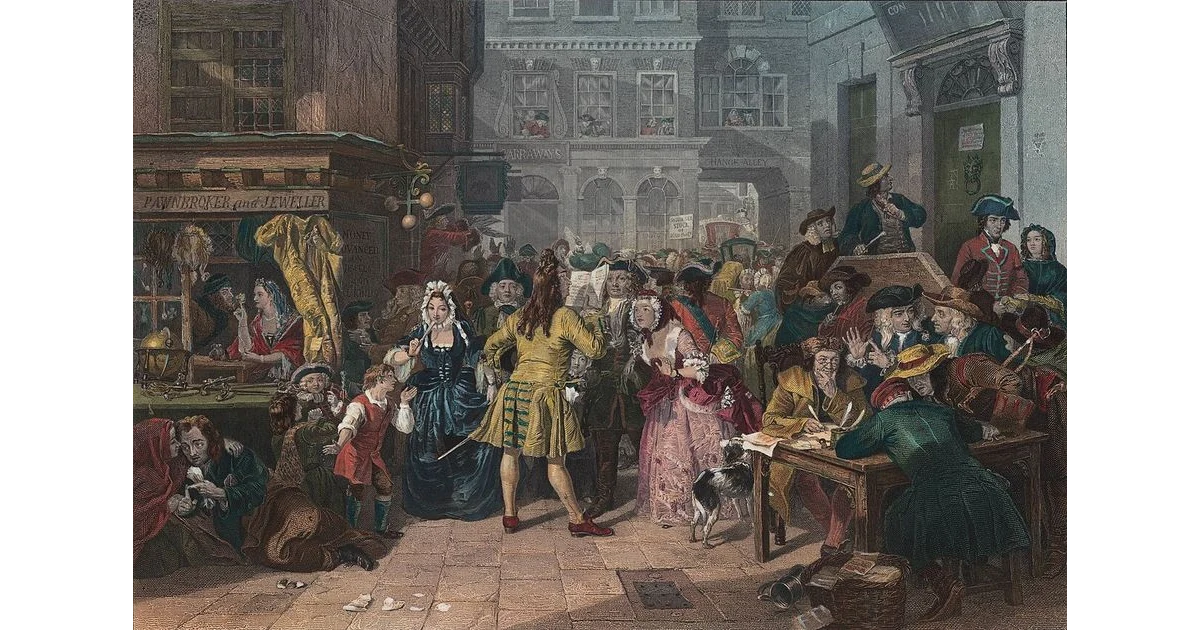
What happened
The South Sea Company was granted a British monopoly on South American trade in 1711. Its actual trade was minimal, but it compensated by taking on government debt and issuing shares. South Sea shares rose from £100 in January 1720 to £1,000 in June. Members of Parliament received free shares in exchange for votes. By September 1720 shares had collapsed to £100. Isaac Newton, who had made and lost a fortune in the company, reportedly said: 'I can calculate the motions of heavenly bodies, but not the madness of people.'[1]
What went wrong
The South Sea Company was a government-backed vehicle for financial engineering rather than genuine commerce. Its directors bribed MPs and officials with free shares to secure the South Sea Act; insiders sold their holdings near the peak. The company spread rumours of trade deals to sustain excitement while actual revenues were negligible. When Parliament passed the Bubble Act to suppress rival stock promotions, it inadvertently triggered a loss of confidence in all speculative securities. Multiple directors' estates were subsequently confiscated; the Chancellor of the Exchequer was imprisoned for corruption.[1]
Lesson learned
Financial instruments backed by government authority are not inherently sound — they can be vehicles for transferring wealth from public investors to connected insiders. Parliamentary involvement in a company's share price creates irreconcilable conflicts of interest. The crisis produced the first serious British financial regulation, though meaningful oversight took another two centuries. The pattern — a monopoly, government endorsement, insider selling at peak, retail investor losses — recurs in every era.
Sources
- [1]
External links can go dark — pages move, paywalls appear, domains expire. Every source above includes a Wayback Machine snapshot link as a fallback. All citations are best-effort research; if a source contradicts our summary, the primary source takes precedence.