Tulip Mania 1637: The Dutch Republic Invents the Speculative Bubble — One Bulb Costs a Canal House
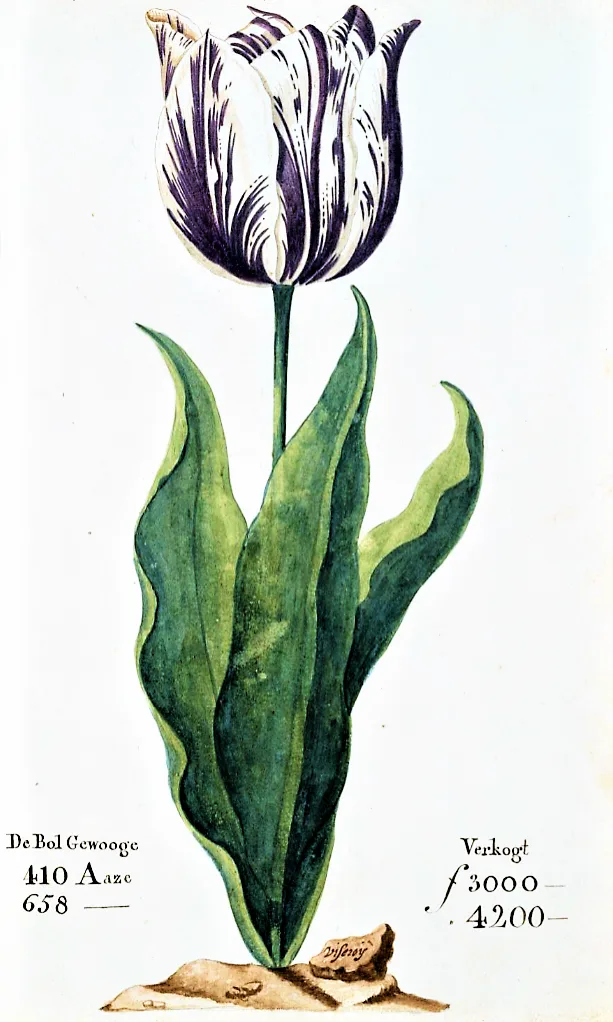
What happened
In the 1630s Dutch Republic, newly introduced tulips became prestige commodities. Between 1634 and early 1637, prices for rare varieties escalated astronomically: a single Semper Augustus bulb reportedly sold for 10,000 guilders — roughly the price of an Amsterdam canal house. Tulip futures contracts, traded in taverns, created what may be the world's first derivatives market. On 3 February 1637, a scheduled auction in Haarlem attracted no buyers. Prices collapsed within days; futures became worthless; thousands of Dutch merchants faced ruin.[1]
What went wrong
Tulip mania created the first documented speculative feedback loop: rising prices attracted new buyers, whose buying drove prices higher, attracting more buyers on the assumption of further rises. Futures contracts required no upfront capital and created massive notional leverage. When demand suddenly reversed, holders of futures owed more than bulbs were worth and found no buyers; contracts were socially but not legally enforceable, so most counterparties defaulted. The crash exposed that no intrinsic value supported rare tulip prices beyond collective belief in their scarcity — a mechanism that would repeat in every subsequent bubble.[1]
Lesson learned
Speculative bubbles follow a consistent anatomy: a novel asset with genuine appeal, positive feedback between rising prices and new buyers, leverage that amplifies gains up and losses down, and collapse when buyers and sellers simultaneously recognise that intrinsic value is lower than market price. Tulip mania in 1637 established a template repeated in railway stocks (1840s), dot-com equities (1999), US housing (2006), and crypto (2021). The assets change; the mechanism does not.
Sources
- [1]
External links can go dark — pages move, paywalls appear, domains expire. Every source above includes a Wayback Machine snapshot link as a fallback. All citations are best-effort research; if a source contradicts our summary, the primary source takes precedence.