Somme Barrage: 1.5 Million Shells, Seven Days of Fire — Wire Uncut, Bunkers Intact, 57,470 Casualties on Day One
What happened
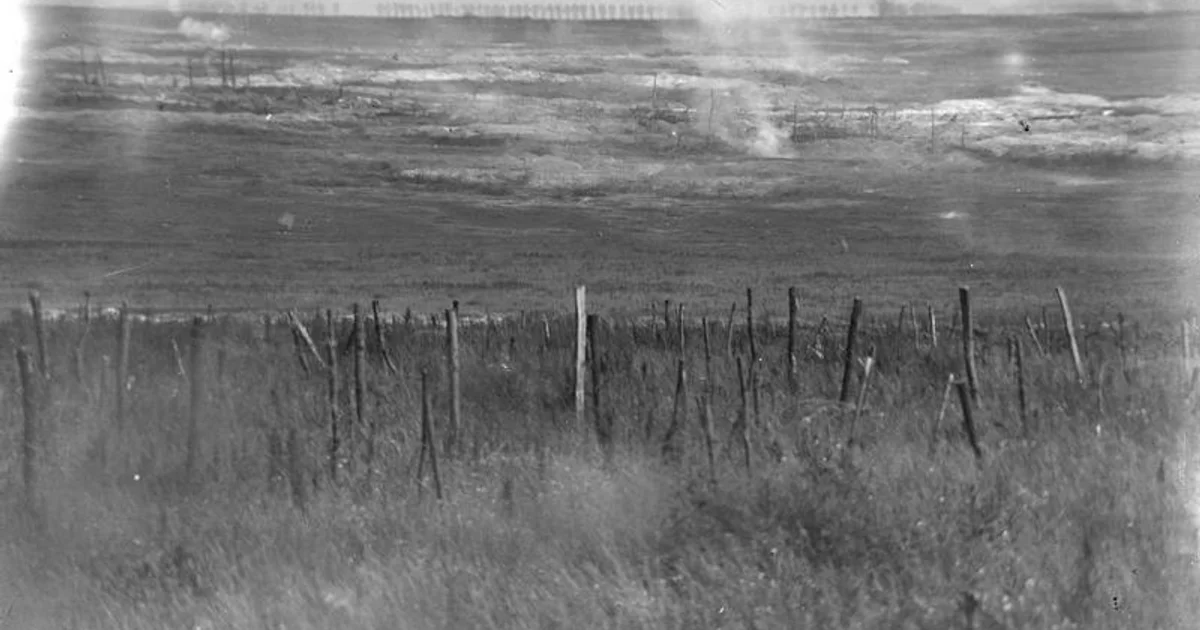
In the seven days before the infantry assault on 1 July 1916, British artillery fired over 1.5 million shells along a 25-mile front on the Somme, at a rate of roughly 3,500 rounds per minute at peak intensity. The bombardment was designed to obliterate German barbed wire, collapse deep dugouts, and destroy machine-gun positions. It achieved none of these objectives: approximately 30% of shells were duds that never detonated, two-thirds of all rounds were shrapnel ineffective against underground concrete, and the German defenders survived in dugouts up to 40 feet deep. When British and Empire infantry went over the top at 7:30 am on 1 July 1916, they were met by intact machine guns and uncut wire. The British Army suffered 57,470 casualties — including 19,240 killed — in a single day, the worst day in the history of the British Army.[1]
What went wrong
The barrage rested on three false technical assumptions. First, planners believed shrapnel shells — the cheapest and most available round — would cut barbed wire at scale; in practice shrapnel blasted wire aside but did not sever it, leaving entanglements intact or worse. Second, British intelligence underestimated the depth of German dugouts: purpose-built shelters 9–12 metres below the surface were impervious to anything short of a direct hit from the heaviest howitzers, of which there were too few. Third, the shell crisis of 1915 had been resolved through mass production that outpaced quality control: independent assessments put dud rates at 25–30%, meaning 375,000–450,000 shells struck the ground and simply did not explode. The combination of wrong munition type, wrong targets, and a catastrophically high defect rate rendered a historically unprecedented expenditure of ordnance essentially useless against prepared defences.[1]
Lesson learned
Mass does not substitute for precision when the munition-target match is wrong. The Somme barrage is the defining historical case for what modern military doctrine calls 'effects-based targeting': the question is not how many rounds were fired but whether the right effect was achieved on the right target. The dud-rate problem also illustrates how production scale without quality assurance produces waste rather than capability. Every subsequent generation of military planners has cited 1 July 1916 as the proof that artillery alone cannot guarantee an infantry advance — a lesson relearned at cost in every major war since.
57470 people died in 1916. Over 4.3 generations at a net reproduction rate of 1.2, each victim's line produces an estimated 2 living descendants today. Their combined lifetime economic output — 57470 × 2 × $2.16M — represents value that was permanently removed from the world. This figure exceeds the primary damage estimate by more than 2× and is shown separately to avoid distorting cross-incident comparisons.
DVL = 57470 × 1.24.3 × $2.16M · methodology §03E
Sources
- [1]
External links can go dark — pages move, paywalls appear, domains expire. Every source above includes a Wayback Machine snapshot link as a fallback. All citations are best-effort research; if a source contradicts our summary, the primary source takes precedence.