A Private Fishing Club Killed 2,209 People and Nobody Was Ever Charged
What happened
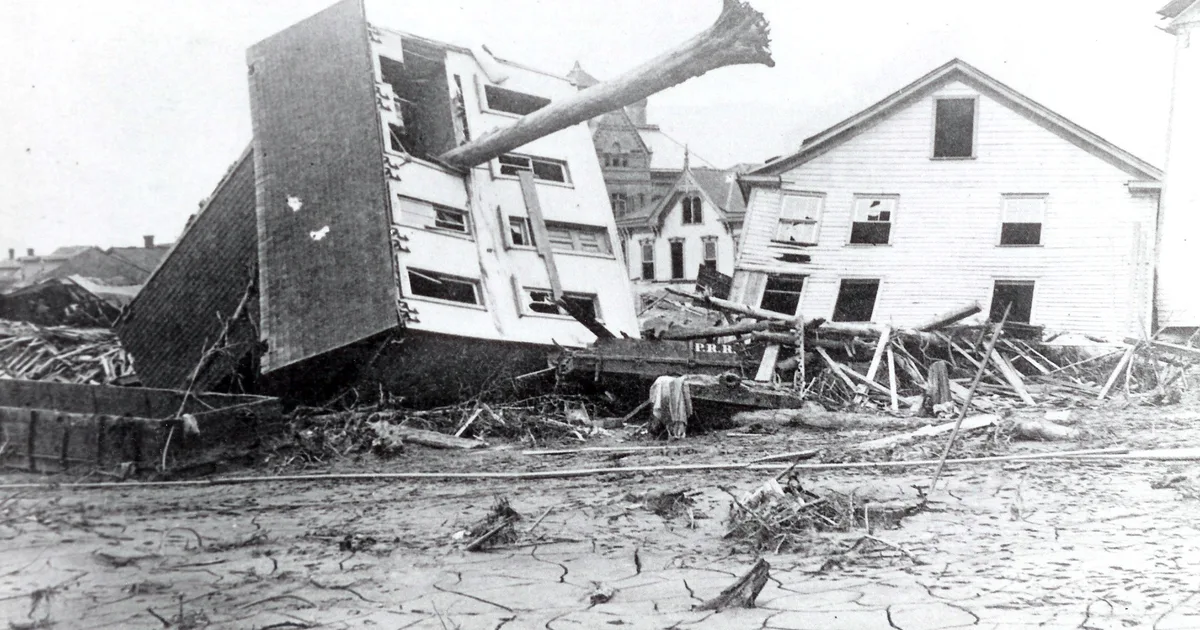
On 31 May 1889, the South Fork Dam in Pennsylvania failed after years of neglect and unauthorised modifications by the South Fork Fishing and Hunting Club — a retreat for Pittsburgh's wealthiest industrialists including Andrew Carnegie and Henry Clay Frick. The resulting flood killed 2,209 people in Johnstown. Not one member of the club was ever held legally responsible.[1]
What went wrong
The South Fork Dam had been built by the Commonwealth of Pennsylvania in 1853 as a reservoir for the Pennsylvania Main Line Canal. When the canal became obsolete after the railroads, the dam was sold and eventually purchased in 1879 by Benjamin Ruff on behalf of the South Fork Fishing and Hunting Club — a private leisure retreat for Pittsburgh's industrial aristocracy, whose membership included Andrew Carnegie, Henry Clay Frick, Andrew Mellon, and other figures of the Gilded Age. The Club made several modifications to the dam that reduced its safety margin to near zero. The original iron discharge pipes were removed and sold for scrap — eliminating the ability to lower the reservoir level during heavy rainfall. The spillway was narrowed and covered with a fish screen to prevent stocked fish from escaping, reducing overflow capacity by approximately 30%. The crest was lowered by about one metre to widen the road across it, reducing freeboard. No engineer was retained to oversee any of these changes. Local engineers and Johnstown residents raised concerns repeatedly. Colonel Unger, the dam's caretaker, wrote to the Club asking for repairs in 1880. The engineer Daniel Johnson Morrell warned in writing in 1880 that the dam was dangerous. John Fulton, a respected mining engineer, inspected the dam for the Club and reported it was inadequate and needed reconstruction. The Club made superficial repairs. In late May 1889, a major storm dropped 150–250mm of rain in 24 hours across the region. As the lake rose, water began flowing over the unprotected crest. With no discharge pipes and a clogged fish screen blocking the spillway, the Club's workers were unable to reduce the lake level. At 3:10 pm on 31 May 1889, the dam failed completely. 20 million tonnes of water, carrying trees, buildings, railway cars, and barbed wire, struck Johnstown at approximately 64 km/h. The entire flood took about ten minutes to reach the city. The wave was described by survivors as a rolling black mass 12 metres high. 2,209 people died, including 396 children. Entire families were wiped out. The Club's members were widely blamed. Pennsylvania courts found no grounds for criminal prosecution under existing law. Civil suits were dismissed on the doctrine of Act of God. No member of the South Fork Fishing and Hunting Club was ever charged, sued successfully, or paid any compensation to victims. Carnegie donated a library to Johnstown.[1]
Lesson learned
Removing safety infrastructure from a reservoir to save scrap metal value, then blocking your own spillway to keep fish in, is not maintenance negligence — it is constructing a weapon aimed at a downstream city. Legal impunity for catastrophic infrastructure failure caused by private ownership choices does not make the decision defensible. It makes the law inadequate.
Sources
- [1]
External links can go dark — pages move, paywalls appear, domains expire. Every source above includes a Wayback Machine snapshot link as a fallback. All citations are best-effort research; if a source contradicts our summary, the primary source takes precedence.