Concorde AF4590: A 17cm Metal Strip on the Runway Causes a Fire, Kills 113, and Ends Supersonic Passenger Flight
What happened
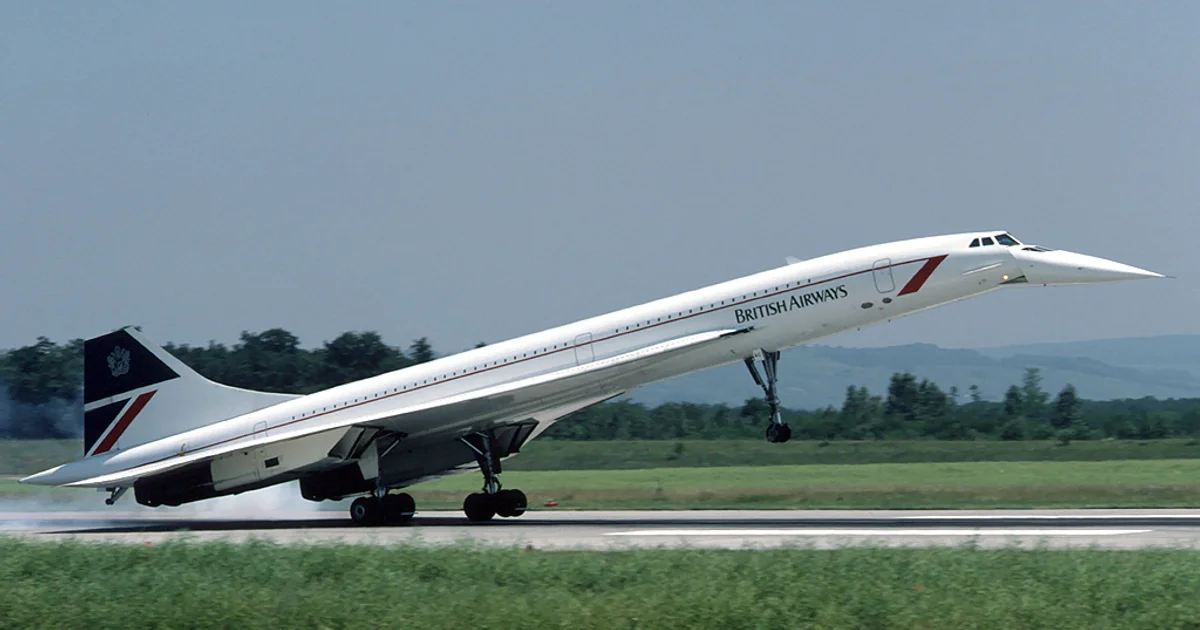
On 25 July 2000, Air France Concorde F-BTSC took off from Paris Charles de Gaulle Airport carrying 100 passengers and nine crew on a charter flight to New York. During the takeoff roll, the aircraft ran over a 43-centimetre titanium strip that had fallen from a Continental Airlines DC-10 shortly before. The debris burst a tyre; tyre fragments struck the fuel tank, which ruptured and ignited. The aircraft, on fire and unable to gain speed to climb safely, crashed into a hotel in Gonesse 90 seconds after leaving the runway. All 109 on board and 4 people on the ground were killed. Both Air France and British Airways grounded their Concorde fleets immediately. The aircraft returned to service in 2001 but never recovered commercial confidence, and both operators retired the fleet in 2003 — ending 27 years of supersonic passenger service.[1]
What went wrong
The proximate cause was a 43cm titanium wear strip from a Continental Airlines DC-10 thrust reverser, dropped on the runway during a previous departure. But the accident exposed a pre-existing vulnerability that had been known for years: Concorde's fuel tanks were not protected against tyre debris. Between 1979 and 2000 there had been 57 tyre incidents on Concorde, seven of which had damaged fuel tank structures. No tire-burst had previously ignited a tank. The investigation found that the specific combination of tyre size, tank position, and takeoff speed created a known but unmitigated risk. The aircraft was also overweight by approximately 700kg on departure, meaning it was accelerating slowly. The fire suppression system could not reach the location of the fire. When the crew realised the severity at V1 — the decision speed after which an abort is no longer safe — it was too late to stop.[1]
Lesson learned
The Concorde crash illustrated how risk can hide inside a system through the mechanism of near-misses that are never reported as warnings. Fifty-seven tyre incidents in twenty years normalised the problem; because none had caused a crash, each incident became evidence that the system was 'handling it' rather than evidence of accumulating risk. This is the same mechanism identified in the Challenger and Columbia disasters: incidents that could have been catastrophic but weren't get reclassified as 'acceptable performance'. The accident also showed that a supersonic transport's margin for cascading failure is much thinner than a subsonic aircraft's — the physics of high-speed low-altitude flight leave almost no time to respond to an emergency.
Sources
- [1]
External links can go dark — pages move, paywalls appear, domains expire. Every source above includes a Wayback Machine snapshot link as a fallback. All citations are best-effort research; if a source contradicts our summary, the primary source takes precedence.