De Havilland Comet: Square Windows and Metal Fatigue Destroy the World's First Commercial Jet
What happened
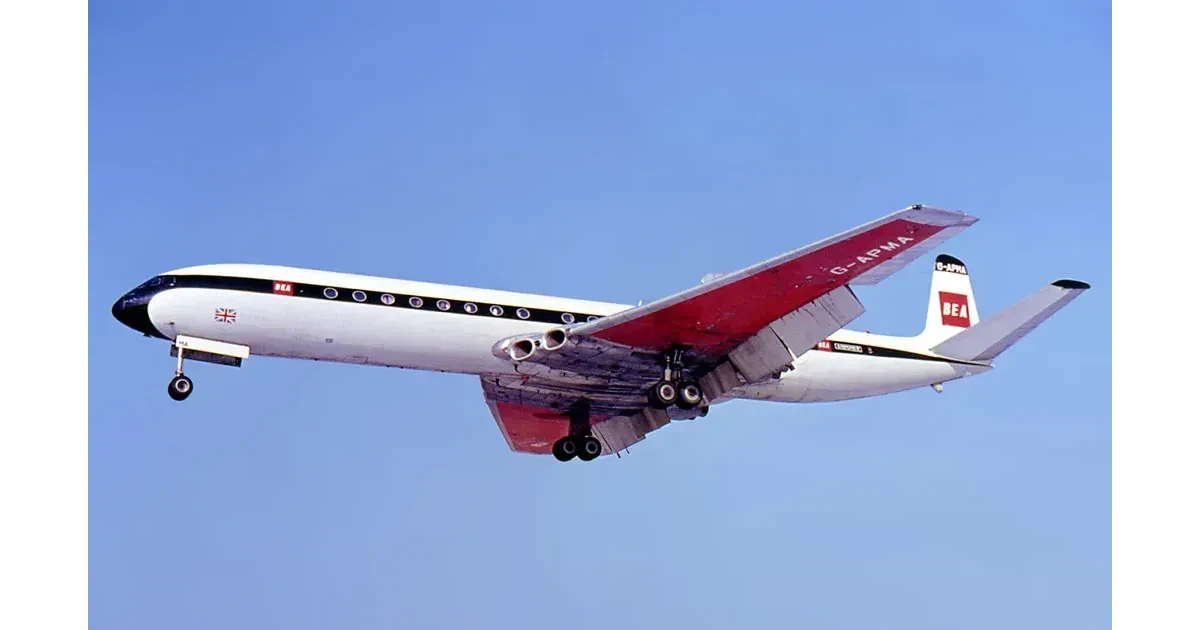
The de Havilland Comet, the world's first commercial jet airliner, was grounded after two catastrophic in-flight breakups in early 1954, killing 56 people across two flights. The cause was metal fatigue radiating from the corners of its square windows — a failure mode that engineers had not anticipated, because high-altitude pressurised jet travel was entirely new. The crashes gave Boeing and Douglas time to overtake Britain's lead in commercial aviation; Britain never recovered it.[1]
What went wrong
Each flight pressurised and depressurised the fuselage, cycling stress at the sharp corners of the square windows. After roughly 1,000 cycles, fatigue cracks propagated rapidly through the skin, causing explosive decompression at 35,000 feet. The Comet had not been fatigue-tested to realistic failure under pressurisation cycles — a test methodology that did not yet exist in aviation. An earlier test had applied pressure loading using water rather than air, which gave misleadingly optimistic results because water does not expand explosively when a crack opens.[1]
Lesson learned
Being first in a technically novel field means facing failure modes that no engineering standard yet covers. The Comet disaster created modern aviation pressurisation fatigue testing — but the cost was 56 lives and Britain's leadership in commercial aviation. Square window apertures have not appeared on passenger jets since.
56 people died in 1954. Over 2.8 generations at a net reproduction rate of 1.2, each victim's line produces an estimated 2 living descendants today. Their combined lifetime economic output — 56 × 2 × $2.16M — represents value that was permanently removed from the world.
DVL = 56 × 1.22.8 × $2.16M · methodology §03E
Sources
- [1]
External links can go dark — pages move, paywalls appear, domains expire. Every source above includes a Wayback Machine snapshot link as a fallback. All citations are best-effort research; if a source contradicts our summary, the primary source takes precedence.