Chernobyl Reactor 4 Explodes During Safety Test That Had Disabled Its Safety Systems
What happened
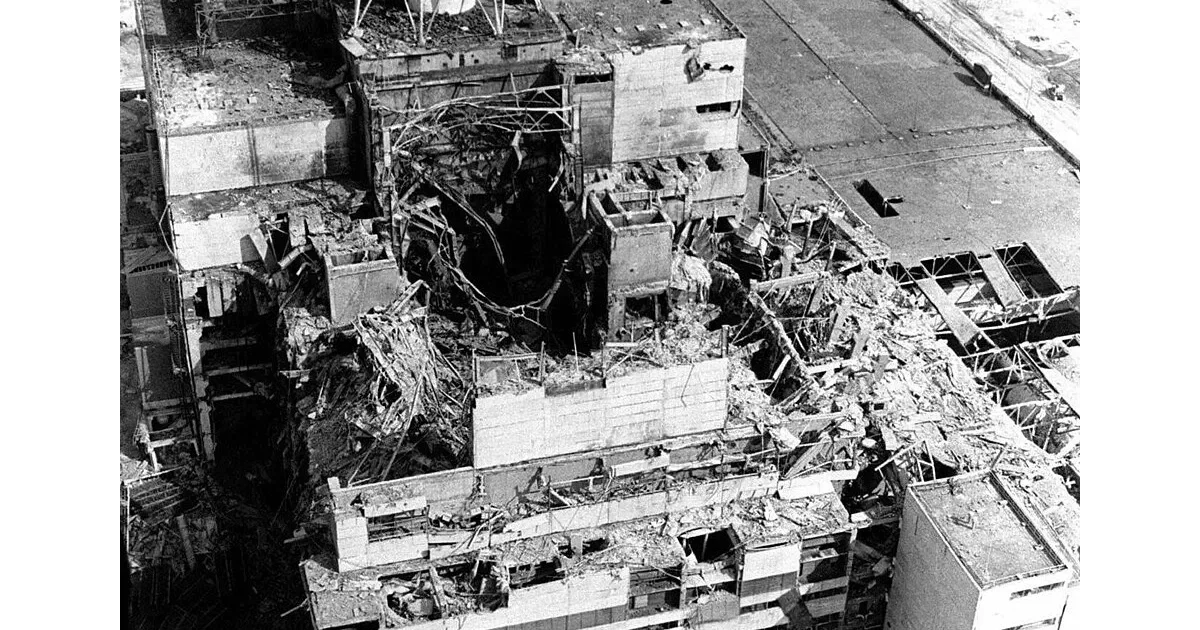
On 26 April 1986, Reactor No. 4 at the Chernobyl Nuclear Power Plant in Soviet Ukraine exploded during a scheduled safety test, releasing radiation equivalent to 400 Hiroshima bombs over 150,000 km² of Europe. The test was designed to prove a safety feature — but required operating the reactor at a dangerously low power level with its emergency cooling system manually disabled. A fatigued night crew, handed incomplete instructions and working under political pressure to complete the test before a scheduled shutdown, triggered the runaway reaction.[1]
What went wrong
The RBMK reactor had a positive void coefficient at low power: as cooling water turned to steam, reactivity increased rather than decreased — the opposite of most Western reactor designs. This fundamental design flaw was known but classified. The safety test required simulating a power loss, so operators had to bring the reactor to an unstable low-power state and then bypass automatic shutdown systems to prevent them from terminating the test. When the operator attempted to raise power after an unexpected drop, the reactor entered a state that the crew had no procedure to manage. Eight seconds after they attempted an emergency shutdown, the reactor had increased in power by a factor of 30,000.[1]
Lesson learned
The Chernobyl paradox: a test designed to improve safety required disabling the systems that kept the reactor safe to run it. This logical contradiction should have cancelled the test. The disaster also revealed that a classified design flaw can be more dangerous than a public one — because the people most likely to encounter it are the least likely to know it exists.
Sources
- [1]
External links can go dark — pages move, paywalls appear, domains expire. Every source above includes a Wayback Machine snapshot link as a fallback. All citations are best-effort research; if a source contradicts our summary, the primary source takes precedence.