Soviet N1 Moon Rocket Explodes Four Times in a Row, Ending the USSR's Lunar Programme
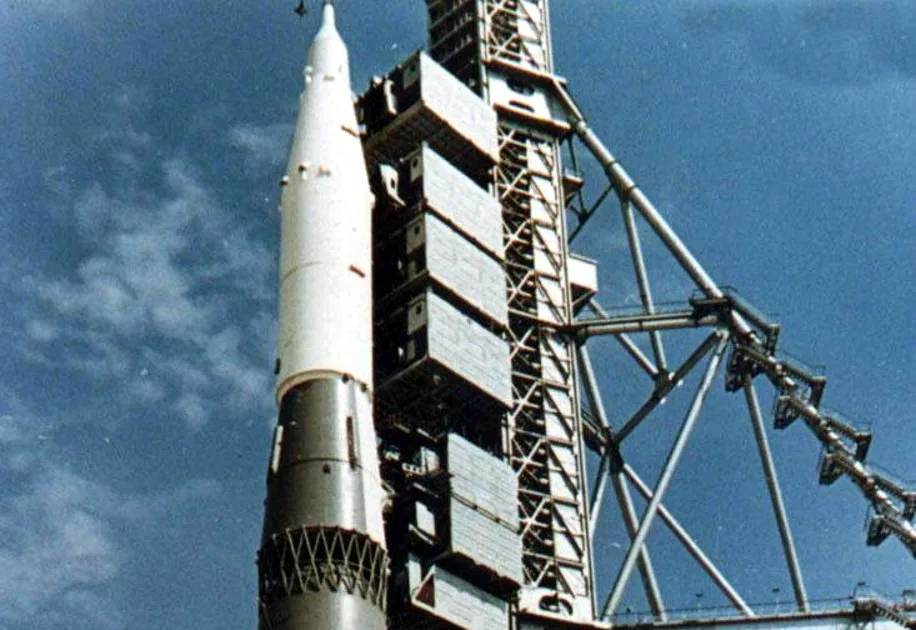
What happened
The Soviet N1 rocket, the USSR's answer to Saturn V and intended to land cosmonauts on the Moon, failed all four of its launch attempts between 1969 and 1972. The second launch — on 3 July 1969, just 13 days before Apollo 11 — created one of the largest non-nuclear explosions in history when the fully fuelled rocket fell back onto its launch pad and destroyed it. The programme was cancelled in 1976 after consuming an estimated ₽12 billion (equivalent to roughly $12 billion today) with nothing to show.[1]
What went wrong
The N1's first stage used 30 NK-15 engines — far more than any other rocket — because Soviet engineers lacked the large single engine the US had in the F-1. Chief designer Sergei Korolev had died in 1966; his rivals ensured the programme continued without proper ground testing. Crucially, the entire 30-engine first stage was never test-fired as an integrated unit before flight — each engine was tested individually. At launch, vibration, fuel flow oscillation, and electrical fires in the plumbing caused one or more engines to fail, which cascaded through the remaining 29. The second failure's explosion was so large it destroyed the launch complex, setting the programme back months.[1]
Lesson learned
Thirty small engines is not equivalent to one large one — it is thirty times the failure modes in a tightly coupled system. Full-stack integrated testing is not optional, regardless of cost or schedule pressure. The N1 programme demonstrated that political pressure to match a rival can cause engineers to skip the tests most likely to prevent catastrophic failure.
Sources
- [1]
External links can go dark — pages move, paywalls appear, domains expire. Every source above includes a Wayback Machine snapshot link as a fallback. All citations are best-effort research; if a source contradicts our summary, the primary source takes precedence.