The Petrov Incident: Soviet Early Warning Satellite Mistakes Sunlight for US Missiles — One Officer Prevents World War Three
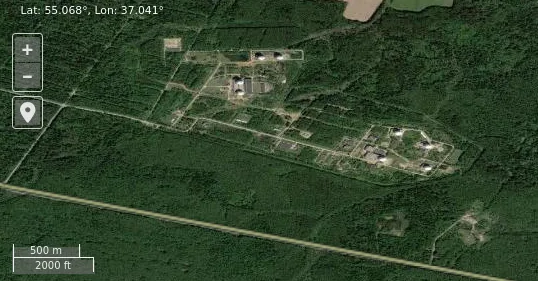
What happened
On 26 September 1983, the Soviet Oko satellite early warning system reported five US intercontinental ballistic missiles inbound from Montana. The duty officer at Serpukhov-15, Lieutenant Colonel Stanislav Petrov, had minutes to decide whether to relay the alert up the chain of command — which, under Soviet doctrine, would have triggered an immediate nuclear retaliatory strike. Petrov judged it a false alarm: a genuine US first strike would involve hundreds of missiles, not five. He was right. The system's infrared sensors had mistaken reflected sunlight off high-altitude cloud tops near Montana for missile exhaust plumes. No missiles existed. Petrov's individual judgment broke a decision cascade that could have ended with nuclear exchange. The Soviet state reprimanded him for not filling in his logbook correctly. The false alarm remained classified until 1998.[1]
What went wrong
The Oko ("Eye") constellation — nine Soviet Molniya-orbit satellites designed to provide continuous early warning of US ICBM launches — had a design weakness. The satellites detected missiles by identifying the infrared signature of rocket exhaust against the cold background of deep space. Under certain geometric conditions, sunlight reflected by high-altitude cloud tops produced a signature indistinguishable from a missile plume. The specific failure on 26 September 1983 was triggered by an unusual alignment: the satellite was positioned so that it was looking across the sunlit edge of the Earth toward Montana's Malmstrom Air Force Base, where genuine Minuteman III silos were located. A thin layer of high-altitude clouds caught the sunlight at exactly the right angle to mimic the spectral profile of a missile launch. The system's confidence rating was set to its highest level — maximum certainty. The geopolitical context dramatically amplified the risk. Three weeks earlier, Soviet air defence had shot down Korean Air Lines Flight 007, killing 269 people and triggering a severe international crisis. NATO was in the midst of Able Archer 83, a large nuclear release exercise that Soviet intelligence had assessed — incorrectly but plausibly — as a possible cover for an actual first strike. Soviet leadership was in a documented state of acute nuclear anxiety. The standing protocol was clear: a detected launch went up the chain immediately. The system was designed to accelerate that decision under time pressure, not to enable scepticism. The human element was therefore load-bearing in a way the system's designers had not intended. Petrov's decision not to report was based on two things the automated system could not assess: the implausibility of a five-missile salvo as a genuine first strike (a real US attack would have involved hundreds of warheads), and a gut-level distrust of a system he knew had teething problems. He was, by his own later account, partly guessing. The logbook failure that earned him his reprimand was the most consequential administrative error in military history — he had been too busy managing the crisis to write anything down.[1]
Lesson learned
A system designed to accelerate human decision-making under time pressure is, functionally, a system that replaces human decision-making under time pressure. The Oko alert did not give Petrov ten minutes to deliberate — it gave him ten minutes of maximum-confidence warning with an implicit instruction to act. The design assumption was that a real alert would be correct, so the system's job was to ensure the response was fast enough. Petrov's scepticism was an undesigned feature, and it was the only thing that worked. The deeper lesson is about accountability in catastrophic systems. No redundancy check, no second satellite confirmation, no independent ground-radar correlation was required before the alert went up the chain. The Soviets had built a system optimised for speed in the scenario they most feared, and had not adequately stress-tested what it would do when confidently wrong. Similar failure modes appear in algorithmic trading, autonomous weapons targeting, and AI decision-support in medicine: automated systems generating high-confidence outputs that structurally bypass human review. The Petrov incident is the most consequential known case of what happens when a high-stakes automated system has no graceful failure mode and a correct outcome depends on one person deciding, under pressure, not to trust the machine.
No economic damage resulted — Petrov's decision prevented any action. The Oko satellite constellation cost an estimated 500–800 million rubles over its operational life. The systemic risk created by its false-positive failure was existential and unquantifiable. The counterfactual — a nuclear exchange between the US and USSR in 1983 — is by any measure the largest avoided loss in recorded history.
Sources
- [1]
External links can go dark — pages move, paywalls appear, domains expire. Every source above includes a Wayback Machine snapshot link as a fallback. All citations are best-effort research; if a source contradicts our summary, the primary source takes precedence.