Beauvais Cathedral: Medieval Engineers Build the Highest Gothic Vault Ever — It Collapses Twice
What happened
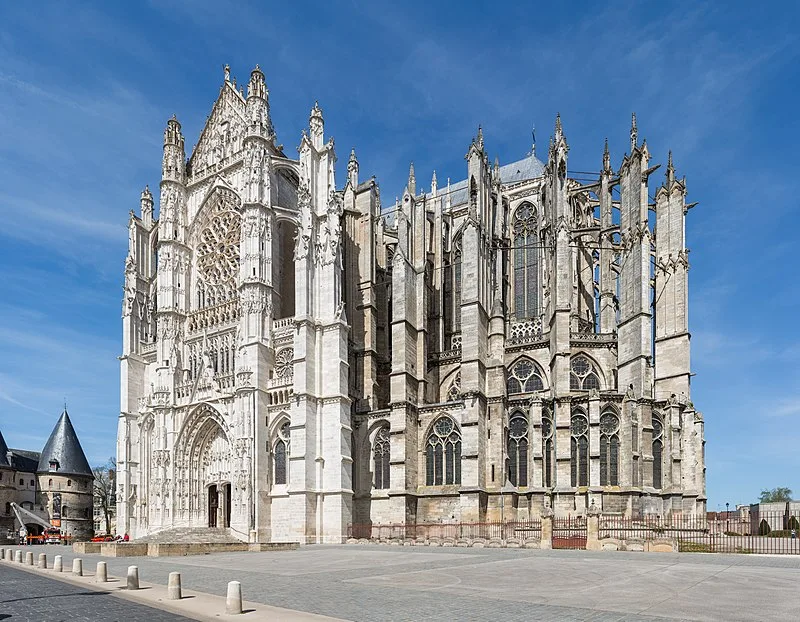
Construction of the Gothic choir at Beauvais Cathedral began in 1225 with a vault height of 48.5 metres — the highest ever attempted. In November 1284, twelve years after completion, the choir vault collapsed. Rebuilt with additional piers, it partially collapsed again in 1573 when an experimental crossing tower — added against engineering advice — fell. The nave was never built. Beauvais Cathedral remains the most ambitious structural failure in the history of architecture: a project that consistently prioritised record-breaking height over structural understanding.[1]
What went wrong
Each design phase pushed beyond what the engineering knowledge of the era could reliably support. The original choir used pier spacing calculated to minimise material, leaving insufficient resistance to wind-induced oscillation. After the 1284 collapse, additional piers were inserted without redesigning the fundamental load paths. The 1573 tower was added by cathedral authorities overriding structural objections — a classic case of management overruling engineering.[1]
Lesson learned
Pushing beyond the known performance envelope requires proportionally deeper validation. When a system collapses, retrofitting patches without rearchitecting the root cause produces the same failure again. Authority overriding engineering judgment is as old as cathedrals — and just as dangerous. Beauvais is still incomplete, 800 years on.
15 people died in 1284. Over 29.6 generations at a net reproduction rate of 1.2, each victim's line produces an estimated 221 living descendants today. Their combined lifetime economic output — 15 × 221 × $2.16M — represents value that was permanently removed from the world. This figure exceeds the primary damage estimate by more than 2× and is shown separately to avoid distorting cross-incident comparisons.
DVL = 15 × 1.229.6 × $2.16M · methodology §03E
Sources
- [1]
External links can go dark — pages move, paywalls appear, domains expire. Every source above includes a Wayback Machine snapshot link as a fallback. All citations are best-effort research; if a source contradicts our summary, the primary source takes precedence.