Banqiao Dam: China's "Iron Dam" Collapses and Kills 170,000 in the Deadliest Infrastructure Failure in History
What happened
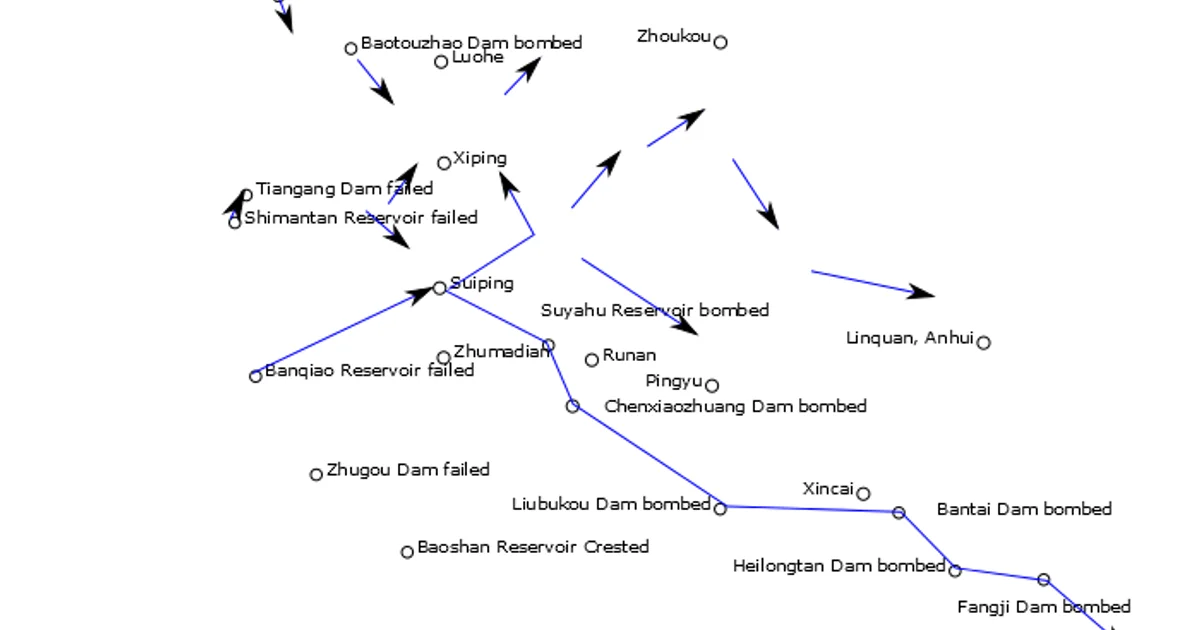
Completed in 1952 with Soviet assistance and nicknamed the "Iron Dam" for its supposedly indestructible design, the Banqiao reservoir dam in Henan province, China, was rated to withstand a 1,000-year flood. When Typhoon Nina made landfall in August 1975 and delivered rainfall the region had not seen in 2,000 years, Banqiao and 61 other dams failed in a catastrophic cascade. The flood killed between 85,000 and 240,000 people — estimates vary because China suppressed information about the disaster for two decades — and displaced 11 million. It remains the deadliest infrastructure failure in recorded history.[1]
What went wrong
During construction, Chinese hydraulic engineer Chen Xing warned that the planned spillway capacity was dangerously insufficient and recommended 12 sluice gates. The final design included only 5. Chen was removed from the project for his persistence. When Typhoon Nina's rainfall warnings arrived days before the flood, communication failures meant downstream villages were never evacuated. The dam's design had no provision for a flood beyond its rated threshold — once the reservoir began overtopping, collapse was inevitable. The cascade failure of 61 downstream dams amplified the original catastrophe many times over.[1]
Lesson learned
Safety margins exist precisely for events that exceed normal expectations. Dismissed engineers and suppressed warnings are leading indicators of catastrophic failure, not inconveniences to be managed. Infrastructure that has no meaningful failure mode above its design threshold is infrastructure that will eventually fail catastrophically. China withheld information about the disaster for 20 years — delayed transparency guarantees the same mistakes are repeated.
Sources
- [1]
External links can go dark — pages move, paywalls appear, domains expire. Every source above includes a Wayback Machine snapshot link as a fallback. All citations are best-effort research; if a source contradicts our summary, the primary source takes precedence.