Hubble Space Telescope Launches With a Blurry Mirror Ground to the Wrong Specification
What happened
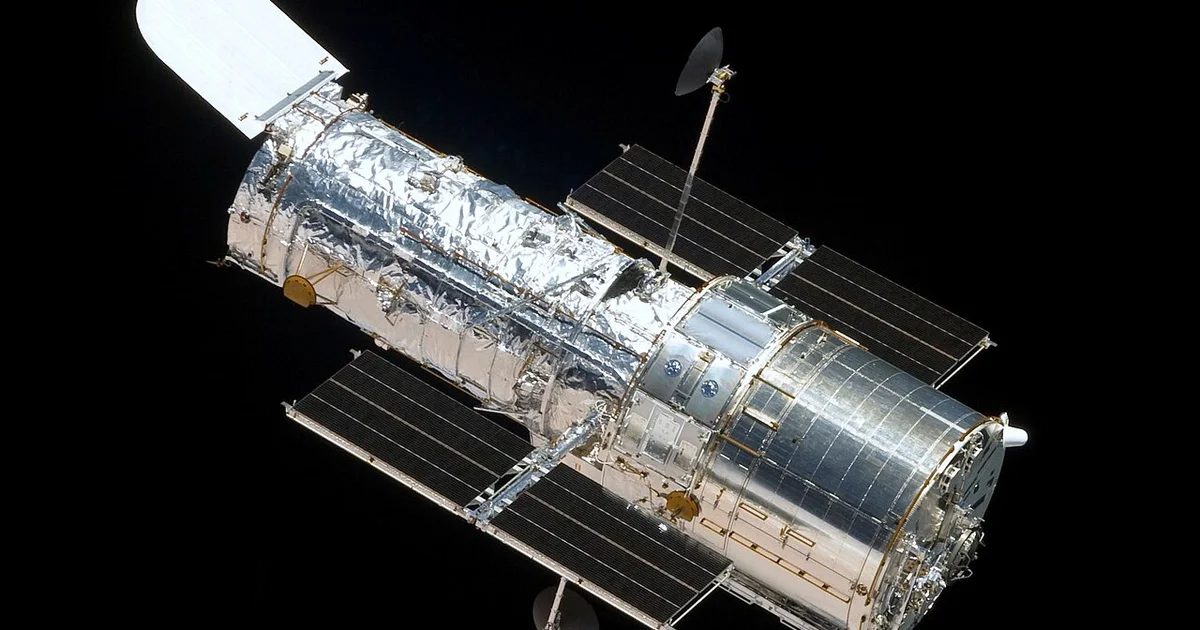
On 24 April 1990, NASA launched the Hubble Space Telescope — the most expensive scientific instrument ever built at $1.5 billion — and within weeks discovered the primary mirror had been ground to the wrong shape. The mirror was polished with extraordinary precision, but to the wrong prescription: it was too flat at the edges by 2.2 micrometres, roughly 1/50th the width of a human hair. The result was severe spherical aberration that produced blurry images unusable for Hubble's primary scientific mission. NASA had launched a $1.5 billion defective camera into orbit.[1]
What went wrong
Perkin-Elmer, the mirror contractor, used a single measuring device — a null corrector — to verify the mirror's shape during grinding. That null corrector had been assembled with one lens 1.3 mm out of position. Because Perkin-Elmer relied exclusively on this one instrument rather than cross-checking with independent measurements, the systematic error went undetected throughout the entire polishing process. Two other optical tests during manufacturing had shown anomalies consistent with the flaw, but engineers dismissed the discrepancies as instrument error rather than investigating them. NASA's oversight process did not require independent verification of the primary mirror figure before launch.[1]
Lesson learned
Single-point-of-failure quality assurance is not quality assurance. A $1.5B precision instrument must be verified by multiple independent measurement methods. Anomalous test results should be investigated, not dismissed. The $629M corrective optics servicing mission (STS-61, 1993) ultimately transformed Hubble into one of the most scientifically productive instruments in history — but three years of blurred science were an avoidable loss.
Sources
- [1]
External links can go dark — pages move, paywalls appear, domains expire. Every source above includes a Wayback Machine snapshot link as a fallback. All citations are best-effort research; if a source contradicts our summary, the primary source takes precedence.