Spain's 'Invincible' Armada Routed: Wrong Ships, Incompatible Cannons, Rotten Provisions, No Way to Coordinate the Invasion
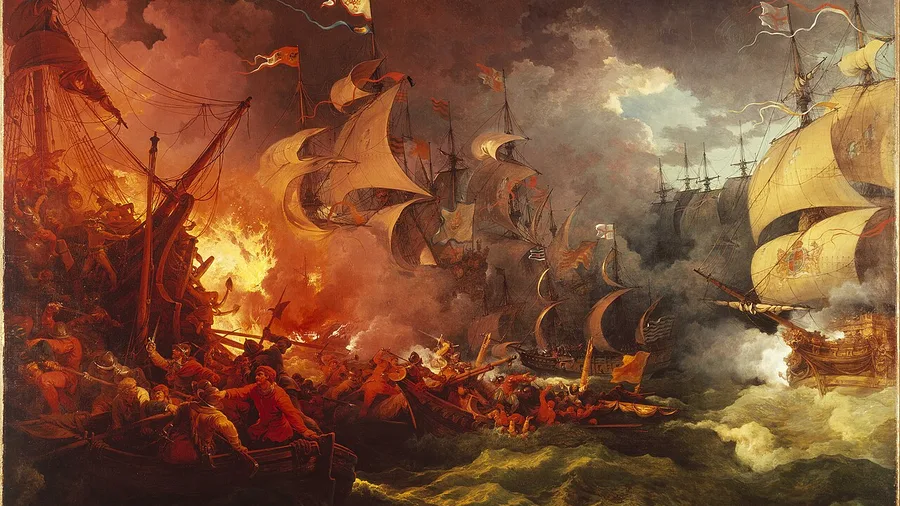
What happened
In 1588, Philip II of Spain launched the most expensive naval expedition of the 16th century to invade Protestant England. The fleet of 130 ships failed not because of storms or English heroics, but because of compounding technical disasters: cannons whose shot didn't match the barrels across a fleet assembled from a dozen different foundries, a battle doctrine a century behind England's, provisions already rotting in green-wood barrels before the fleet left port, and a joint operations plan with no mechanism to communicate between its two commanders. Around 60 ships returned to Spain; an estimated 15,000–20,000 men died — the overwhelming majority from disease, starvation, and drowning, not enemy fire.[1]
What went wrong
The Armada's failures were systemic and compounding. First, ship design: Spanish naval doctrine required large, high-sided galleons designed to close range, fire once, and board. England had abandoned this in favour of lower, faster race-built galleons engineered for sustained long-range artillery. A third of the Armada consisted of converted merchant hulks — slow, unmaneuverable, and ideal targets. Second, cannon incompatibility: the fleet was assembled hastily from ships carrying artillery bought across European markets — Portuguese arsenals, Neapolitan foundries, seized Flemish workshops — each using different caliber standards. Wrecks excavated off the Irish coast have confirmed shot that didn't fit the guns. Guns were designed to fire once at close range; Spanish gun carriages and rigging weren't configured for repeated firing under battle conditions, while English crews could reload and fire continuously. Third, provisions: Francis Drake's 1587 raid on Cádiz destroyed the fleet's seasoned barrel staves. Replacements were cut from green unseasoned wood. By mid-June, water was 'green and stinking' and meat had rotted. Medina Sidonia wrote to Philip II from Coruña describing an army too sick to fight. Philip ordered him to proceed. Fourth, the coordination plan had no communication mechanism: the entire operation required Medina Sidonia's fleet to rendezvous with the Duke of Parma's 17,000 troops in the Spanish Netherlands. Messages between them took up to a week. When Medina Sidonia anchored off Calais on 6 August expecting Parma to embark immediately, he had no way to know that Parma had only learned of his arrival four days earlier — or that Dutch flyboats controlled the shallow coastal waters Parma's barges needed to cross. On the night of 7–8 August, the English launched eight fire ships into the anchored fleet. In the panic, Spanish ships cut their anchor cables to escape. Without anchors, the fleet couldn't regroup in the shallow Flemish coast, and was forced to retreat north around Scotland and Ireland — routes for which the fleet had no reliable charts, in autumn storms, with sick crews and no supplies.[1]
Lesson learned
The Armada is remembered as a story of storms and English luck. The primary record tells a different story: a procurement failure (incompatible guns), a supply chain failure (green-wood barrels), a doctrine failure (wrong tactics for the conditions and adversary), and a coordination architecture with no communication mechanism for the only contingency that mattered. Philip II had received repeated warnings — Medina Sidonia wrote three times before departure that the fleet was unfit; Santa Cruz, the original commander, had died partly from the stress of managing its inadequacies. The enterprise proceeded because abandoning it was politically inconceivable. The pattern — sunk cost, ignored expert warnings, optimistic assumptions about coordination — has appeared in every large-scale tech and logistics failure since.
15000 people died in 1588. Over 17.4 generations at a net reproduction rate of 1.2, each victim's line produces an estimated 24 living descendants today. Their combined lifetime economic output — 15000 × 24 × $2.16M — represents value that was permanently removed from the world. This figure exceeds the primary damage estimate by more than 2× and is shown separately to avoid distorting cross-incident comparisons.
DVL = 15000 × 1.217.4 × $2.16M · methodology §03E
Sources
- [1]
External links can go dark — pages move, paywalls appear, domains expire. Every source above includes a Wayback Machine snapshot link as a fallback. All citations are best-effort research; if a source contradicts our summary, the primary source takes precedence.