IJN Yamato — World's Most Powerful Battleship Sunk by Aircraft in Two Hours on a One-Way Mission
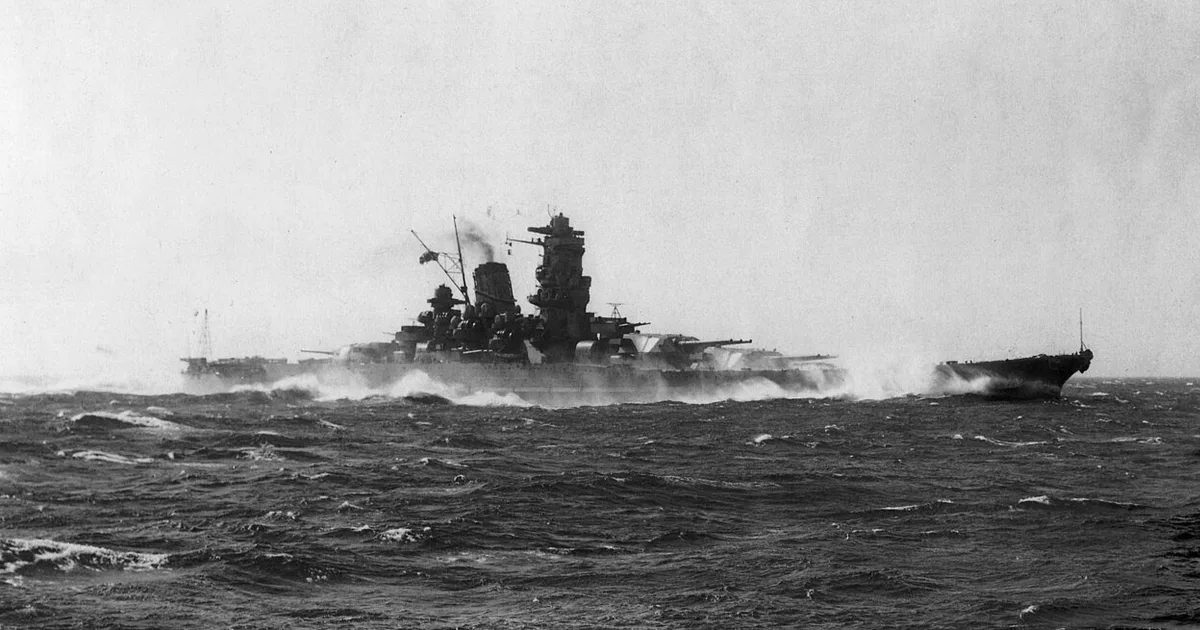
What happened
The IJN Yamato — the largest and most heavily armed battleship ever built — was sunk on 7 April 1945 by 280 US carrier aircraft during Operation Ten-Go, a one-way mission to Okinawa with fuel only for the outward voyage. Of her 3,332 crew, 276 survived. The entire strategic premise of her construction — that naval supremacy required the biggest guns at sea — had been rendered obsolete by carrier aviation years before she ever fired her guns in anger.[1]
What went wrong
Japan's Imperial Navy had invested an enormous fraction of its budget in Yamato and her sister ship Musashi, building them around the Kantai Kessen ("decisive battle") doctrine: win the war with a single overwhelming fleet engagement. This doctrine was not updated as carrier aviation demonstrated — at Pearl Harbor, Midway, and the Philippine Sea — that battleship-on-battleship warfare was finished. By April 1945, Japan had almost no aviation fuel for its carriers and almost no pilots capable of using them. The Yamato was deployed as a surface kamikaze: a floating fortress sent to be destroyed uselessly in exchange for buying time. She was found, tracked, and sunk in two hours by the force she was designed to defeat.[1]
Lesson learned
Building the most technically sophisticated version of a paradigm being made obsolete by a competing paradigm is among the most expensive categories of institutional failure. The Yamato's architects understood battleships; they could not bring themselves to accept that battleships were over. The same error — investing deeply in a technology at the moment a successor is making it irrelevant — is visible in every major incumbent disruption in commercial technology.
3056 people died in 1945. Over 3.2 generations at a net reproduction rate of 1.2, each victim's line produces an estimated 2 living descendants today. Their combined lifetime economic output — 3056 × 2 × $2.16M — represents value that was permanently removed from the world.
DVL = 3056 × 1.23.2 × $2.16M · methodology §03E
Sources
- [1]
External links can go dark — pages move, paywalls appear, domains expire. Every source above includes a Wayback Machine snapshot link as a fallback. All citations are best-effort research; if a source contradicts our summary, the primary source takes precedence.