Intel Pentium FDIV Bug: Floating-Point Division Error Forces $475 Million Recall After Intel Calls It a Non-Issue
What happened
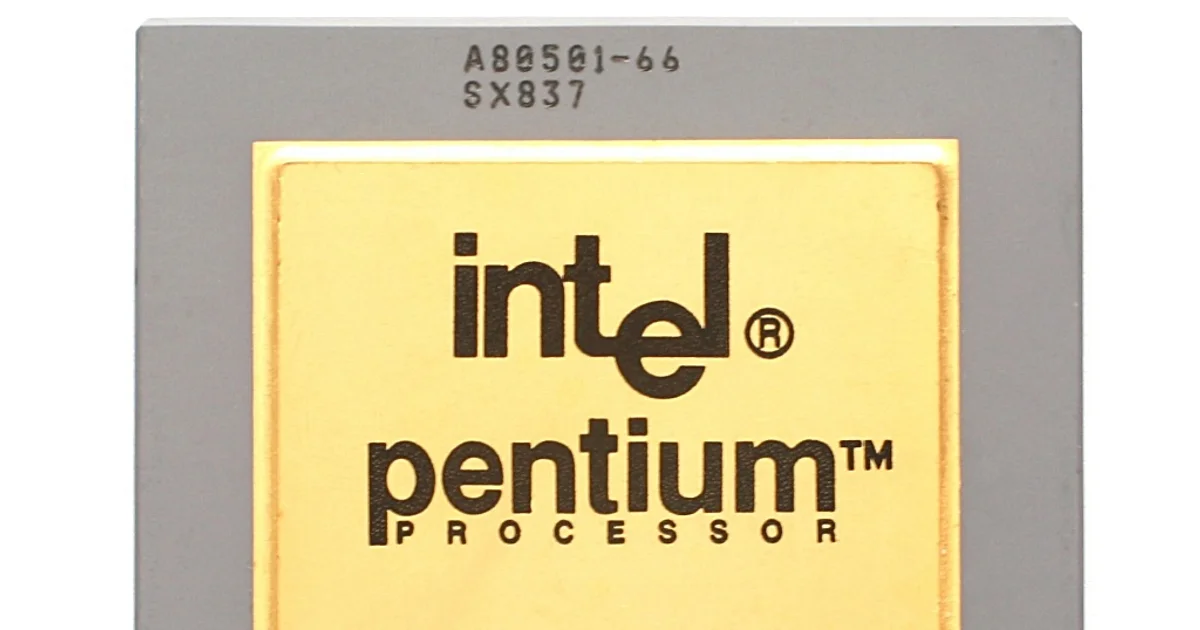
In October 1994, mathematics professor Thomas Nicely discovered that Intel's flagship Pentium processor returned incorrect results for certain floating-point division operations — for example, dividing 4,195,835 by 3,145,727 produced an error in the fifth significant digit. Intel had known about the bug since May 1994 but had quietly stopped shipping the flawed chips without any public disclosure. When Nicely posted his findings to a Usenet newsgroup in November, the story spread globally within days. Intel initially responded that the bug would affect a 'typical user' only once every 27,000 years and offered replacements only to those who could prove a scientific need. IBM halted all Pentium shipments. Intel capitulated in December, offering unconditional replacements and booking a $475 million charge.[1]
What went wrong
A lookup table used in the SRT division algorithm was missing five correct entries out of 1,066, introduced during a manual transcription step in chip design. Intel's internal testing detected the flaw in May 1994 but management decided the error was too minor to warrant a public recall or disclosure, quietly changing the production mask without telling customers. The PR response made the situation dramatically worse: telling ordinary users they were too unsophisticated to be affected by a division error in a processor sold for scientific computing was a catastrophic misread of public trust. IBM's halt to shipments — backed by IBM's own analysis suggesting errors could occur far more frequently than Intel claimed — forced Intel's hand.[1]
Lesson learned
Hardware bugs in shipped silicon cannot be quietly patched — any disclosed flaw in a product already in consumer hands requires a public statement and voluntary recall process, or the cover-up becomes the larger story. Intel's 'we know better than the customer' communications strategy became a textbook example of how not to handle a product defect. The incident established the expectation that CPU errata must be publicly disclosed, leading to Intel's current published errata sheets for all processor families.
Sources
- [1]
External links can go dark — pages move, paywalls appear, domains expire. Every source above includes a Wayback Machine snapshot link as a fallback. All citations are best-effort research; if a source contradicts our summary, the primary source takes precedence.