Flash Crash of 2010: HFT Algorithm Triggers $1 Trillion Market Wipeout in 36 Minutes
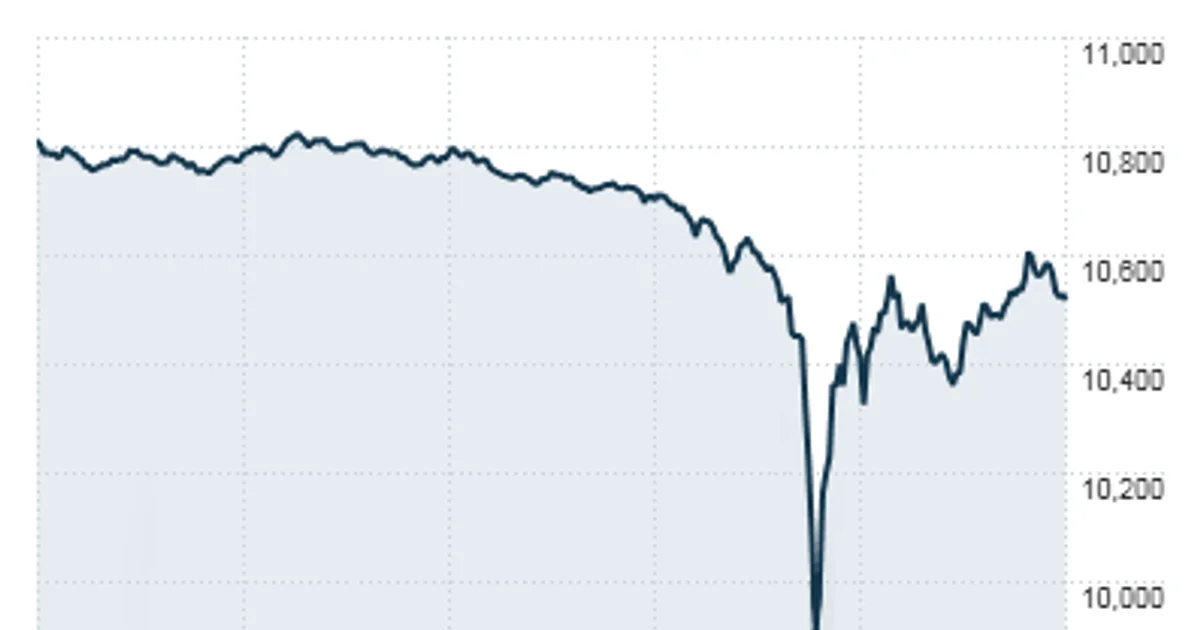
What happened
On 6 May 2010, the Dow Jones Industrial Average plunged 998 points — the largest single-day intraday drop in history — within 36 minutes, briefly erasing approximately $1 trillion in market value before recovering almost entirely. The trigger was a single $4.1 billion sell order of E-Mini S&P 500 futures placed by mutual fund Waddell & Reed, executed by an automated algorithm instructed only to target a volume rate (9% of the prior minute's volume) with no regard for price or time. As its selling depressed prices, high-frequency trading firms amplified the cascade in a hot-potato feedback loop, bouncing positions between each other at falling prices.[1]
What went wrong
The sell algorithm lacked any price or market-impact constraints — it was allowed to sell indefinitely regardless of how much it moved the market. As prices fell, HFT firms began withdrawing liquidity and trading against each other at absurd prices; some stocks briefly traded at $0.01 or $100,000. The absence of cross-market circuit breakers fast enough to halt the cascade allowed the feedback loop to run for 36 minutes before prices snapped back. The SEC and CFTC joint report concluded that the single large order, combined with an absence of market-wide safeguards, was sufficient to destabilise the entire US equity market.[1]
Lesson learned
Execution algorithms must be constrained by market-impact limits, not just volume rates. A single unconstrained order can destabilise entire markets when interacting with HFT feedback loops. Robust circuit breakers that work across all trading venues simultaneously are essential infrastructure — not optional additions.
Sources
- [1]
External links can go dark — pages move, paywalls appear, domains expire. Every source above includes a Wayback Machine snapshot link as a fallback. All citations are best-effort research; if a source contradicts our summary, the primary source takes precedence.