EDP's Côa Valley Dam: State Company Poured Concrete Over the World's Largest Palaeolithic Rock Art Site, Suppressed the Discovery for Two Years, Then Lost the Dam Anyway
What happened
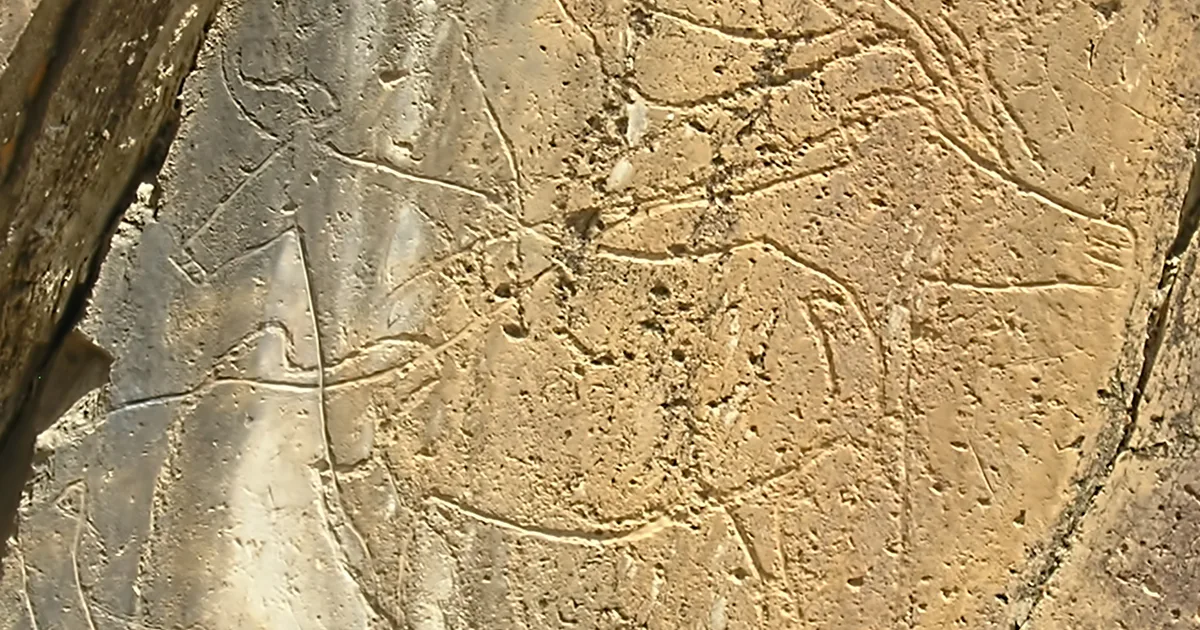
In 1992, EDP — the Portuguese state electricity company — began construction of a 110-metre hydroelectric dam on the Côa river in northeastern Portugal. Pre-construction surveys had already documented hundreds of Palaeolithic rock engravings along the valley walls, some dating to 22,000 years ago: the largest known concentration of outdoor Pleistocene art on Earth. EDP challenged the dating, commissioned counter-studies, dismissed the project archaeologist, and continued pouring concrete. The discovery became a national political crisis. The incoming Socialist government of António Guterres halted the dam in November 1995. An estimated 30 billion escudos — roughly €150M at 1995 exchange rates — was written off. The Côa Valley was declared a UNESCO World Heritage Site in 1998. Portugal got no dam, no power, and a bill for what is now a car park at a World Heritage site.[1]
What went wrong
The failure had three compounding layers. The first was procedural: EDP began site preparation and formal construction without completing a proper archaeological impact assessment. The Côa valley had been flagged as potentially significant in earlier desk studies; the survey that documented the petroglyphs was conducted by CNART (the Portuguese National Centre for Artistic and Archaeological Records) in 1992–1994 under contract to EDP — meaning EDP was the entity funding the research that revealed the problem. The second layer was the cover-up. When CNART's João Zilhão began publishing the significance of the site in 1994, EDP's institutional response was to contest rather than pause: commission alternative studies to challenge the dating, argue that the engravings were younger than the Palaeolithic and therefore unprotected under heritage statutes, and continue construction on the grounds that the legal status of the site was unresolved. EDP's own senior geologist published a paper claiming the engravings were post-Palaeolithic. Independent radiocarbon and weathering studies consistently contradicted this. But EDP's internal logic — 'we have a project, the project has a budget, the project continues' — meant the counter-evidence didn't trigger a halt. The third layer was political capture: the dam had been approved under the Cavaco Silva government, EDP's board was government-appointed, and the economic case for the dam had been built into regional infrastructure planning for a decade. Stopping it meant admitting that a series of political and technical decisions made over years had been wrong. Zilhão escalated into a public campaign and brought in international archaeologists to validate the site. By 1995 the Côa dam had become an election issue. The incoming Guterres government cancelled it within weeks of taking office — but by then the concrete abutments were poured, access roads were built, equipment was on-site, and contracts had to be unwound.[1]
Lesson learned
Heritage and environmental impact assessments exist to surface exactly this kind of problem before the concrete is poured. When the survey that finds the problem is commissioned by the entity building the project, and that entity also controls whether the findings trigger a halt, the institutional incentive is to contest rather than act. EDP didn't fabricate the geological counter-studies out of malice — it fabricated them because the project had momentum, sunk costs, political backing, and a board with no mechanism to say 'we were wrong three years ago.' The Côa case became a landmark in European cultural heritage law and directly shaped how mandatory pre-construction archaeological assessments are structured across the EU. The deeper lesson: the cost of ignoring an inconvenient survey result early is always higher than the cost of acting on it. In this case, the suppression of the survey preserved one of the most significant archaeological sites in the world. The 'failure' turned out to be one of the better outcomes in modern Portuguese history — which says more about how the original decision was made than about the outcome.
Sources
- [1]
External links can go dark — pages move, paywalls appear, domains expire. Every source above includes a Wayback Machine snapshot link as a fallback. All citations are best-effort research; if a source contradicts our summary, the primary source takes precedence.