Boeing 787 Dreamliner Lithium Battery Fires Force FAA to Ground Entire Global Fleet
What happened
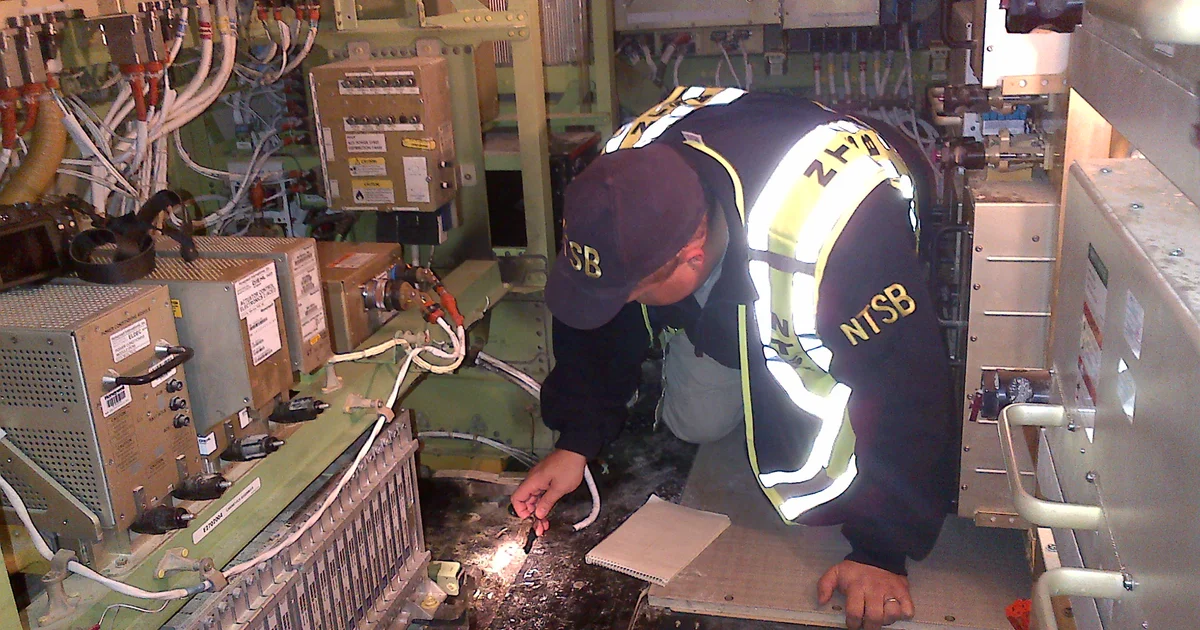
On 7 January 2013, a Japan Airlines Boeing 787 caught fire on the ground at Boston Logan Airport. A lithium-ion battery in the auxiliary power unit had entered thermal runaway — a self-reinforcing overheating cycle — and ignited. Nine days later, an All Nippon Airways 787 made an emergency landing after a similar battery fire. The FAA took an unprecedented step: it grounded the entire global fleet of Boeing 787s — all 50 aircraft then in service — pending investigation. The aircraft, Boeing's flagship next-generation jet and the first commercial aircraft to use lithium-ion batteries, remained grounded for three months. The investigation found Boeing's battery certification had been inadequate: the company had not adequately demonstrated that thermal runaway in one cell would not cascade to adjacent cells.[1]
What went wrong
Boeing's 787 certification for lithium-ion batteries assumed that cell-level thermal runaway could be contained — a critical assumption that proved incorrect. The certification process had relied on analysis and testing that did not replicate the exact battery configurations and charge states present in service. The batteries, supplied by GS Yuasa and installed by Thales, were operating outside their intended parameters in ways not detected during certification. The NTSB investigation found 'short-circuit within the battery' as the probable cause but noted that the root cause of the short was never definitively identified. Boeing had pioneered the use of lithium-ion batteries in commercial aviation primarily to reduce weight — the batteries are significantly lighter than the nickel-cadmium alternatives. The fix required encasing each battery in a steel containment system with a venting mechanism, adding back much of the weight saved.[1]
Lesson learned
The 787 battery fires exposed the challenge of certifying genuinely novel technology in safety-critical systems. Boeing, GS Yuasa, Thales, and the FAA had all approved the battery system without a sufficiently rigorous test for propagating failure. The 'it's never failed before' certification paradigm is inadequate for new technologies that have no operational track record. The grounding was the FAA's first fleet-wide grounding since 1979 (DC-10, also after a crash). The three-month gap between grounding and return to service cost Boeing an estimated $600M in fix costs and customer compensation, and delayed deliveries to dozens of airlines. The 787 later became Boeing's best-selling widebody aircraft, but the battery certification failure became a module in aviation safety courses about novel material introduction.
Sources
- [1]
External links can go dark — pages move, paywalls appear, domains expire. Every source above includes a Wayback Machine snapshot link as a fallback. All citations are best-effort research; if a source contradicts our summary, the primary source takes precedence.